
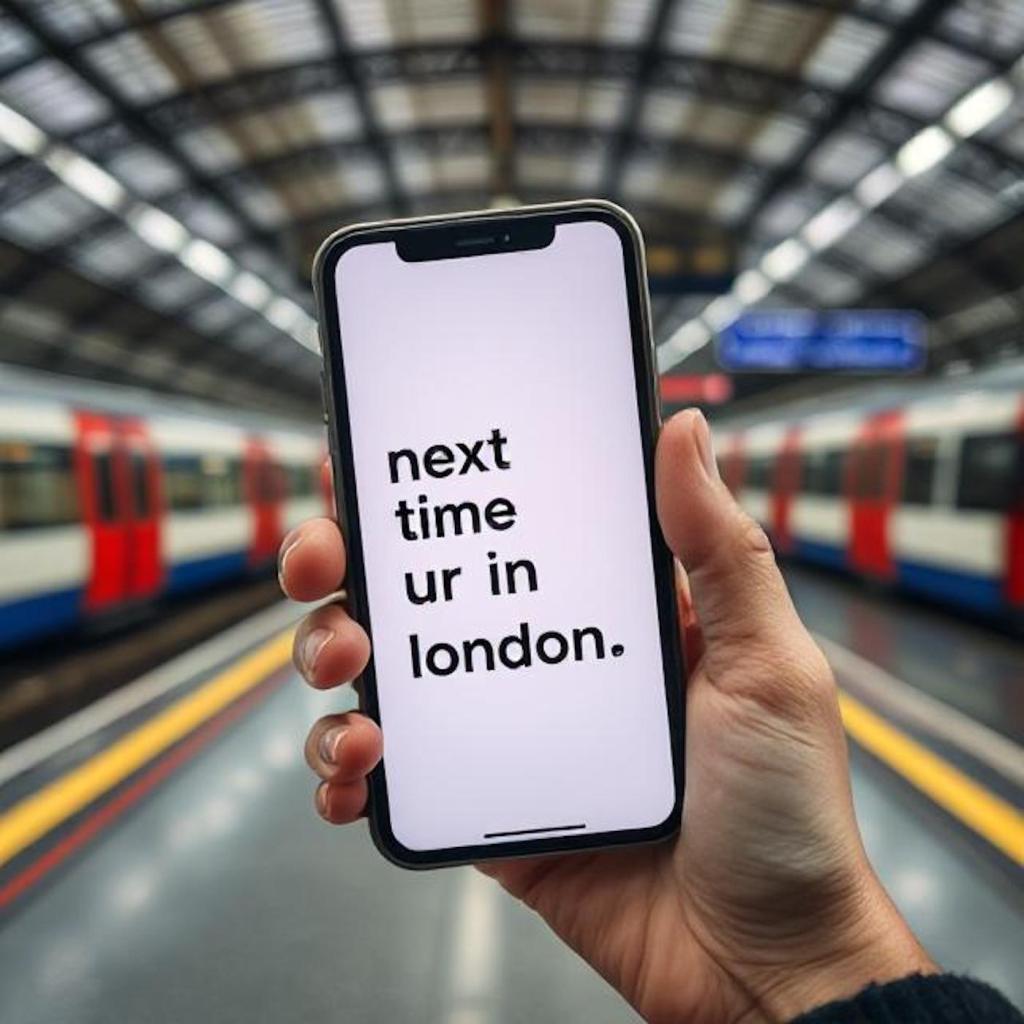
Ahead of the release of my album Next time ur in london, I spoke to Naomi Mac about the inspirations behind the piece.
A lot of your back catalogue is notated pieces for acoustic instruments. Do you see this as a departure?
Yes and no. I have often had pieces or ideas on the go that don’t quite fit into my ‘standard practice’. That’s partly why I made Midi Times & Spaces, which maybe more consciously took concerns from my acoustic pieces and applied them to working with a computer.
I would always encourage people, if they have weird, off-piste ideas, to run with them as far as they go. You can limit yourself by having too strict an idea of who you are, or what you do, or what people expect of you.
Trains seem to feature quite heavily on this album. Are you a train enthusiast?
I certainly prefer it to driving! I have been on many trains, and many to London for concerts, composer courses etc. This piece maybe begins from the question ‘Why did I always have to go to London?’
Lots of important musical institutions are there but – almost worse – there is a real sense that the classical music world is defined by taste-makers in London. Orchestras around the UK seem to take their lead from institutions there, while performances in London have a sense of being heard by the ‘right’ people. There might be some slow change here, with such great stuff coming out of e.g. Birmingham and Manchester, but I think a fair degree of it remains.
There seems to be some AI elements in these pieces. Is that something you wanted to engage with here?
A lot of these pieces started with ‘the voice’. That was the thing that felt furthest in fact from my usual pieces, as it felt like a lot of them wanted to be text-heavy without all that much musical accompaniment.
That was really the beginning of the AI and machine involvement. AI trained on various voices is used, including my own in the first track. There are also some mechanical approaches to generating material in the quasi dance tracks that pop up here and there. I think the main thing it gives is a sense of distance from the text, which allows us to reflect on it more easily, and go on some somewhat surreal flights of fancy. The glitches, the cracks, are obvious signs that this is something manufactured, not a given.
The accompanying book, which I made on the recommendation of composer Andy Ingamells, is also created by a machine wielding a pen. I think exploring the personal and impersonal elements of the technology links a lot of it together.
Why did the project need the book?
I wanted to make the release of the album something more than just dropping the audio into the void of the internet. The pieces here are also – for me – unusually head-on in dealing with their chosen theme, but there is lots more that can be said on the subject and the book allowed this to happen. A few things that couldn’t work their way into the music are in there.
It also allowed me to work with some really great artists in Desmond Clarke and Cass Barron in designing and creating the finished product. It was an unusual – and fun – experience to get involved in.
Most people would probably write a piece about a place they really love – it doesn’t necessarily sound like this is the case here!
Yes, true. I sent it round quite a few Londoners to check it wasn’t too insulting. No one seemed too put out! But really it’s not even about London the place – which, for the record, I enjoy going to a lot – it’s about London’s place in our sort of cultural imagination.
Some of the people worst affected by London’s central position are in fact those who live in London. Try buying a house there while forging a composition career. It ain’t going to be easy.
What do you think needs to be done to improve access to creative opportunities?
There is such scarcity at the moment, that I’m not sure I even know where to begin. It can be tempting to think that the solution is to tear down the institutions in London but this will not really help anything, as the ENO saga perhaps demonstrates.
Partly I wish that local institutions had a stronger sense of their own power and identity. They can make some big decisions and – for a wee new music person like me – have significant spending power. Why follow when you can create your own scene?
You describe all composers – and I quote – as ‘paranoid motherfuckers’ at one point. Care to elaborate?
The daily business of trying to be a composer involves quite a lot of scrabbling around for opportunities, and a fairly constant drip-drip of rejection. It can be quite easy to look at other people and think they’ve got it all sussed out, when they’re experiencing exactly the same thing.
It felt like there needed to be a moment where I turned attention on myself and this feeling, rather than dealing with external factors. I’m still some way off full jaded and paranoid but I thought it better to face the beast head-on!
 Neil Tòmas Smith
Leave a comment